
Learning Philosophy
Children learn best when they feel safe, seen, and valued. That is why our approach to education begins with relationships, not worksheets.
You can have the best curriculum in the world, but if a child does not feel known, it will not matter. Conversely, when a child feels truly seen and understood, learning happens naturally.
How We Teach - Three Pillars
How We Teach
Three Pillars
We are proud to follow the Early Years Foundation Stage - the national framework that guides learning from birth to five in England.
But we bring it to life in our own way.
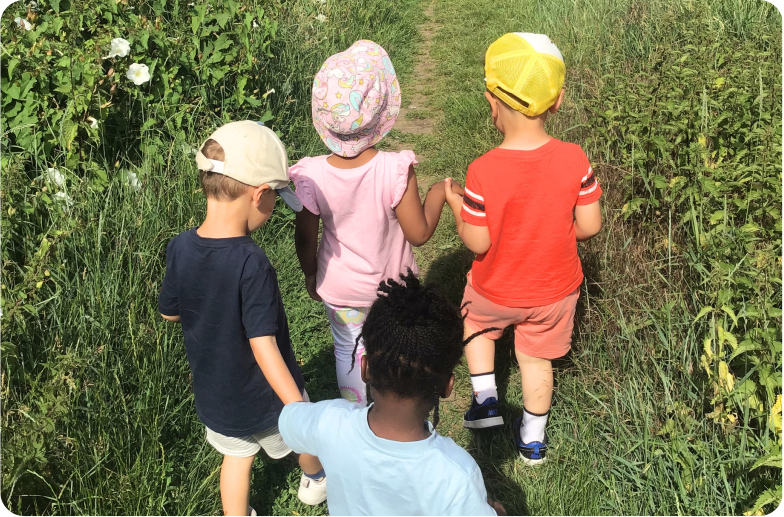
We follow curiosity
When a child asks 'why?', we do not just answer - we explore together. Why is the sky blue? Let us investigate. How do plants grow? Let us plant seeds and observe. Curiosity is the engine of learning. Our job is to fuel it every day, not schedule it away because it is time for the next activity.
We teach through noticing
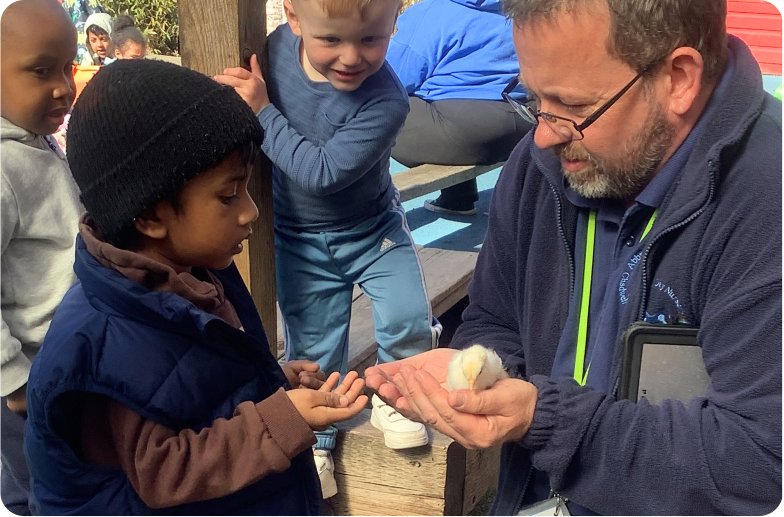
The best teaching happens when you truly know a child. We notice what lights them up, what challenges them and what they need next. This child is fascinated by insects - let us bring in a bug hotel. This child loves music - let us explore rhythm and instruments. One-size-fits-all does not work. Individual attention does.

We measure progress through joy
Yes, we track milestones and development. We complete formal assessments and progress checks. We document learning through observations. But we also measure success by confidence, kindness and a love of learning. A child who leaves us saying 'I love nursery!' is a child who is ready for school.
Click below to discover our programs
Nestlings - 0 to 24 months
Nestlings
0 to 24 months
Every tiny moment matters - playful independence and curiosity
Every tiny moment matters
- playful independence and curiosity
We know that choosing nursery care for your baby is one of the hardest decisions you will make as a parent.
In our Nomi Nest, we create a calm, loving environment where your little one can explore the world at their own pace.
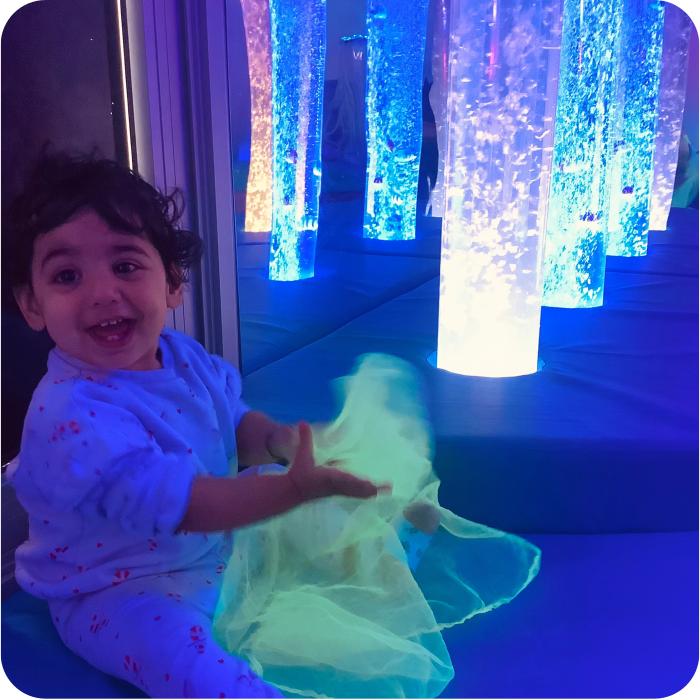
Your baby's day:
Sensory play with natural materials - treasure baskets, different textures, safe objects to explore
Tummy time and movement - building those crucial muscles for crawling and walking
Storytime and songs - supporting early language development through repetition and rhythm
Fresh air and physical play in our secure outdoor baby garden
Plenty of one-on-one attention - because babies need connection, not just care

Food, naps and nature
Whether you are breastfeeding, bottle feeding, or weaning, we follow your lead completely. Fresh breast milk stored safely. Formula prepared fresh. Weaning meals introduced as your baby is ready. We never pressure babies to eat - we respond to their cues.

Sleep
Individual sleeping areas in a quiet space. We follow your home routine as closely as possible and adhere to the latest safe sleep guidelines.

Comfort
Nappies checked regularly. Familiar comforters always welcome. Cuddles unlimited. No baby is left to cry.
Wanderers - 14 to 30 months
Wanderers
14 to 30 months
Becoming who they are
This is one of the most extraordinary stages of early childhood. In just a few months, a baby who was carried everywhere becomes a small person taking their first wobbly steps across the room. Words are beginning. Opinions, too. The world is suddenly a place to explore, and everything is interesting.
It can be exhilarating and exhausting in equal measure. We are here for all of it.
In our Wanderers room, we create a space that moves at their pace — safe enough to feel secure, open enough to encourage adventure. We follow their lead, because at this age, curiosity is the curriculum.
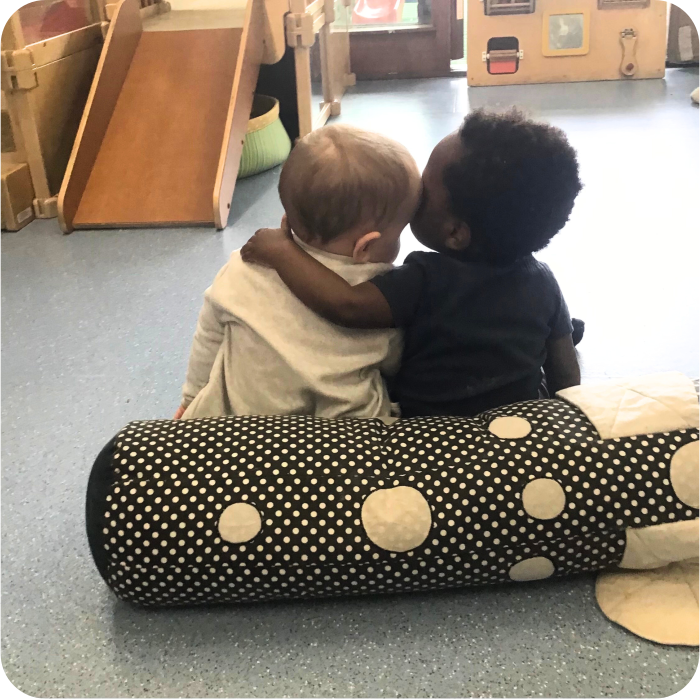
Your wanderer's day:
Physical play that supports emerging walking and balance - low-level climbing, soft surfaces, space to move
Treasure baskets and open-ended materials for curiosity-led exploration
Songs, rhymes, and simple stories - language is exploding right now, and we feed it constantly
Messy and sensory play - water, sand, paint, dough, and natural materials
Small group moments for early social experiences - sharing space, noticing each other
Fresh air every day in our outdoor area, whatever the weather
Predictable routines that help this age group feel secure and ready to explore
How learning happens:
At this age, learning is physical. It happens through movement, through wandering, through trying the same thing eleven times in a row. We lean into that completely.
Through their days with us, Wanderers are developing language, physical confidence, independence, social awareness, emotional regulation and cognitive curiosity — all through play. Everything links to the EYFS, though children of this age do not distinguish between playing and learning, and neither do we.

Food, naps and nature
Finger foods, family-style eating, and plenty of patience. We support the messy, brilliant process of learning to self - feed and celebrate every bite tried, regardless of where it lands. Most Wanderers still need one good nap during the day — we follow your home routine as closely as we can, with calm, quiet individual sleep spaces and familiar comforters always welcome.

Big moments
This age brings a lot of firsts — first steps, first words, first frustrations. We meet all of it with steadiness. These are not problems to manage; they are developments happening in real time.

Partnering with parents
Your app updates will capture the moments you would not want to miss — when they walk across the room unaided, the new word said at snack time, who they played next to, and what they explored. If you are navigating transitions at home — dropping bottles, moving to a bed, beginning to wean off dummies — talk to us. We will work alongside you so your child experiences consistency in both places.
Download your Parent Information Pack
Discover The Nomi Way with our free Parent Information Pack. Inside, you will find everything you need to make an informed decision about your child's early years care.
Explorers - 2 to 3 years
Big feelings, bigger discoveries - learning and discovery
Explorers
2 to 3 years
Big feelings, bigger discoveries
- learning and discovery
The toddler years are magical and messy in equal measure. This is when language explodes, independence emerges, and every day brings something new.
One minute, they are your baby, the next, they are saying 'I do it myself!' with fierce determination.
We are here to guide, support and celebrate it all - including the challenges.
The toddler room hums with energy. There is building, painting, pretend play, music and plenty of outdoor exploration. It is controlled chaos at its finest.
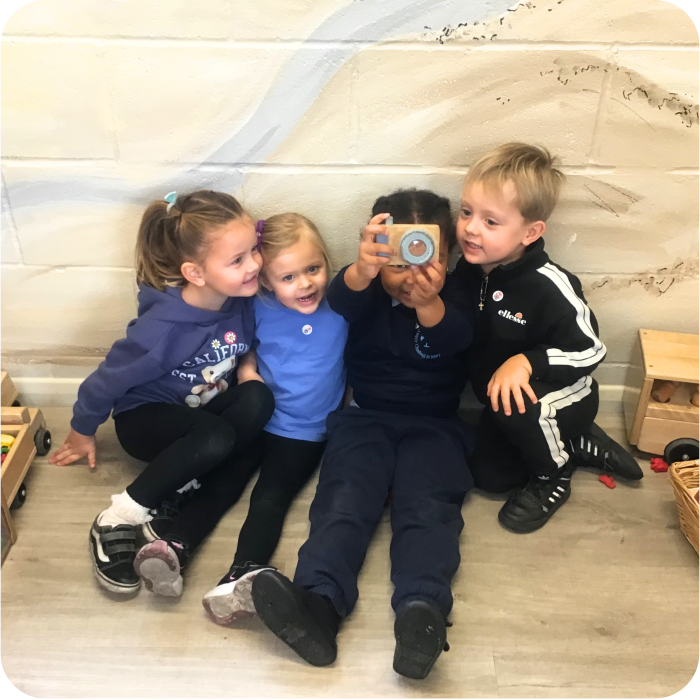
Your Nomi explorers day:
Songs and stories - we sing the same songs repeatedly because toddlers love repetition
Messy play — paint, water, mud and more
Small group activities for mark — making, counting and turn-taking
Child-led play in our creative areas
Daily outdoor time in all weathers
Healthy snacks and a nutritious lunch served family-style

How learning happens
Toddlers learn by doing. So we let them pour (and spill), stack (and knock down), try (and try again). Through play, they develop language, independence, social skills, physical confidence and problem - solving - all without it ever feeling like work.
Big feelings
Toddlers have enormous emotions and tiny self-regulation skills. We handle meltdowns with patience, co-regulation, and understanding. We teach them to name their feelings: 'You are frustrated that the tower fell down. That is okay. Let us take a breath together.
Partnering with parents
Your app updates show you the details of their day - the tower they built, the friend they played with, the new word they said, the painting they created. We share the wins and the wobbles, so you are never out of the loop.
If we are working on something at nursery (like potty training or using cutlery), we will communicate with you so you can support the same goals at home.
Adventurers
3 to 5 years
Adventurers - 3 to 5 years
Ready for anything
- confidence and school readiness
Ready for anything - confidence and school readiness
These are the years that lay the groundwork for school and beyond. Our preschool children are confident communicators, curious explorers, and natural learners. They are discovering who they are, what they love, and what they are capable of.
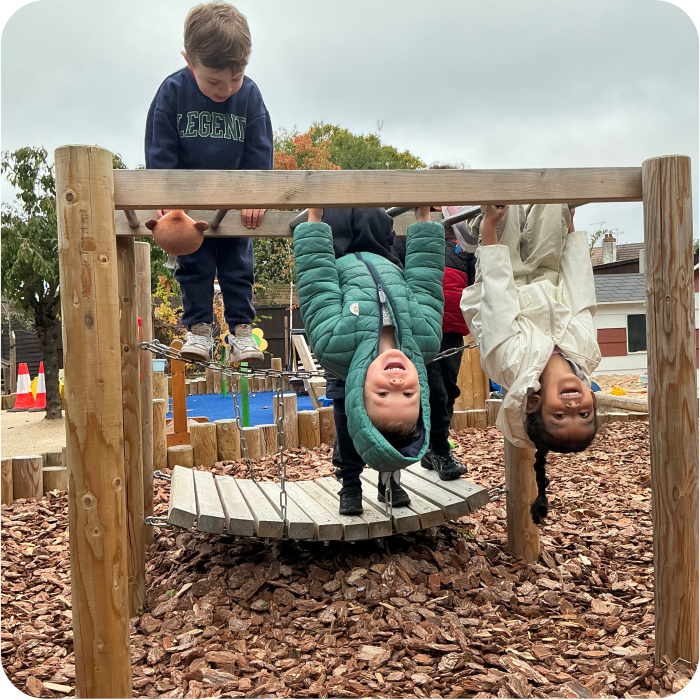
Your nomi adventurers day:
Phonics and early literacy — letter sounds, mark-making, storytelling
Maths through play — counting, patterns, shapes, and problem-solving
Creative expression — art, music, drama, construction, design
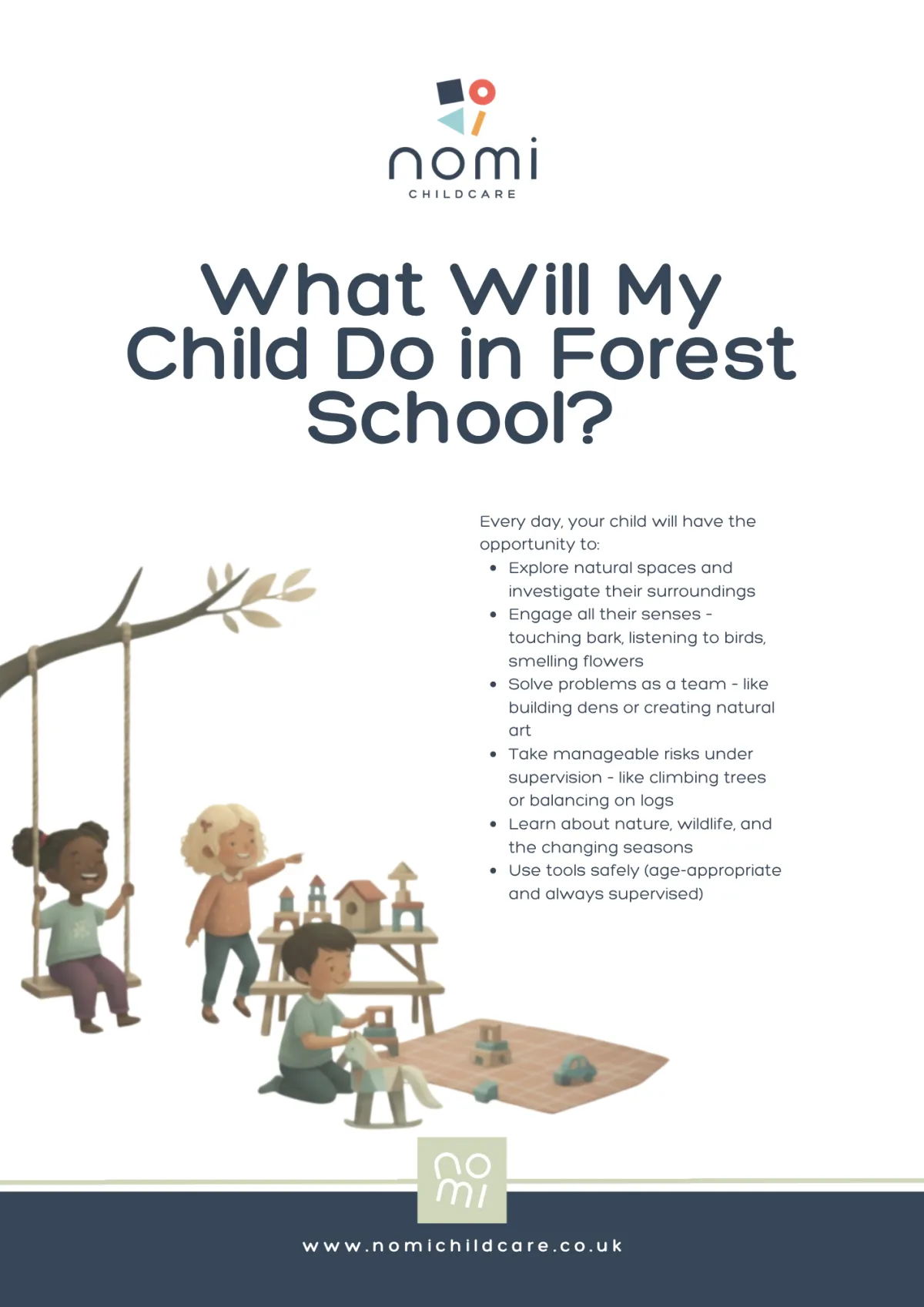
Forest school sessions and outdoor learning
Collaborative play and friendship-building
Healthy meals eaten together
The EYFS seven areas of learning:
Communication & Language
Stories, discussions, expressing ideas clearly
Liteacy
Phonics, mark - making, storytelling and comprehension6
Mathematics
Counting, numbers, shapes, simple problem - solving
Understanding the World
Nature, community, technology, different cultures
Physical Development
Fine motor skills, gross motor coordination, outdoor challenges
Personal, Social & Emotional
Friendships, resilience, managing emotions, understanding rules
Expressive Arts & Design
Painting, music, role play, construction, creativity without limits

School readiness
We introduce structure gradually - lining up, listening time, following multi-step instructions, sitting for group activities - but always in a playful, pressure-free way. By the time they leave us for reception class, they are ready. But they’ve reached that stage through play, not worksheets.

Transition to school
When school looms closer, we work with you to ensure a smooth transition. We share information with their new school (with your permission) and prepare children emotionally for the exciting changes ahead, celebrating their moving on with a graduation ceremony and party.